Ever felt like you’re about to lose it? Overwhelmed by everything around you? It’s common for sensitive people or introverts to feel this way. It’s like your brain is racing and won’t stop.
I once felt super overwhelmed at a loud restaurant. The noise and chaos made me feel crazy. But then I used mindfulness. I focused on my feet touching the ground. This helped me calm my nervous system and feel better.
This taught me about grounding techniques. They help you calm down, even when things are crazy. You can use these methods to keep your mind and body calm, no matter where you are.
Key Takeaways
- Recognize the signs of overstimulation to take action early
- Use mindfulness to calm your nervous system
- Practice simple grounding methods to regain control
- Learn to manage your environment to reduce overwhelm
- Discover the benefits of taking a break to recharge
When Your Brain Won’t Stop: Understanding Overstimulation
It feels like our minds are racing while our bodies are still. This feeling is called overstimulation. It’s overwhelming and hard to deal with. Knowing why it happens and how it affects us is key to feeling better.
The Science Behind Mental Overwhelm
When we feel stressed, our body’s fight-or-flight response kicks in. It releases hormones like cortisol and adrenaline. But, if stress lasts too long, our mind can feel overwhelmed.
How Your Nervous System Responds to Stress
Stress affects our nervous system in many ways. Chronic stress can make our nervous system too active. This makes it hard to relax.
The Cognitive Effects of Overstimulation
Too much stimulation can hurt how well we think. It can mess with our focus, memory, and making decisions. We need to find ways to reduce overstimulation to keep our minds clear.
Common Triggers in Modern Life
Today’s world is full of things that can overwhelm us. Two big ones are too much digital stuff and stressful environments.
Digital Overload and Information Fatigue
Being bombarded with digital info can cause information fatigue. It’s hard to focus and relax when there’s so much to take in.
Environmental Factors That Amp Up Anxiety
Things like loud noises and crowded places can make us feel anxious and overwhelmed.
| Trigger | Effect | Potential Solution |
|---|---|---|
| Digital Overload | Information Fatigue | Digital Detox |
| Environmental Stressors | Increased Anxiety | Mindfulness Practices |

Effective Grounding Techniques for Anxiety Relief
Grounding techniques are great for calming your nerves and easing anxiety. They help you stay in the moment. This distracts you from worries and feelings of fear.
What Makes Grounding Work?
Grounding works because it focuses your mind on now. It stops your thoughts from running wild with worries.
The Neuroscience of Present-Moment Awareness
Being in the moment is based on brain science. When you’re fully present, your brain’s worry network is quieter. This means you feel less anxious.
Breaking the Anxiety Cycle
Grounding breaks the cycle of anxiety. It stops the loop of bad thoughts and feelings. This lets you calm down again.

When to Use Grounding Methods
Knowing when to use grounding is key. It’s about noticing when you’re feeling overwhelmed. Then, you can use these techniques to help.
Recognizing Your Personal Overwhelm Signals
Everyone has their own signs of feeling overwhelmed. You might feel your heart racing, sweat a lot, or feel disconnected. Knowing these signs helps you use grounding techniques right away.
Creating Intervention Points in Your Day
Identify times in your day to use grounding. Simple actions like deep breathing or feeling your feet on the ground can help a lot.
- Practice grounding techniques regularly to enhance their effectiveness.
- Use a variety of grounding techniques to find what works best for you.
- Incorporate grounding into daily activities to improve overall mental well-being.
The 5-4-3-2-1 Method: Engage Your Senses to Calm Your Nervous System
Using your senses can calm your nervous system. The 5-4-3-2-1 method is a simple way to focus on now. It helps reduce anxiety and feeling overwhelmed.
Step-by-Step Implementation
To use the 5-4-3-2-1 method, follow these steps:
- Notice 5 things you can see around you.
- Acknowledge 4 things you can touch or feel.
- Identify 3 things you can hear.
- Recognize 2 things you can smell.
- Take a moment to notice 1 thing you can taste.
Customizing for Different Environments
The 5-4-3-2-1 method works in many places. It’s good for quiet rooms or busy places. In loud areas, focus more on what you see or touch.
Troubleshooting Common Challenges
Some people struggle to focus during anxiety. If this happens, gently bring your mind back to now. Don’t judge yourself.
My Personal Experience with Sensory Grounding
I find the 5-4-3-2-1 method very helpful during panic attacks. It helps calm my nervous system and gives me control back.
How It Helped During a Panic Attack
During a panic attack, I used the 5-4-3-2-1 method. It helped me focus on now, not anxious thoughts.
Adapting the Technique for Chronic Anxiety
For chronic anxiety, use the 5-4-3-2-1 method every day. Regular use makes it more effective when you’re anxious.
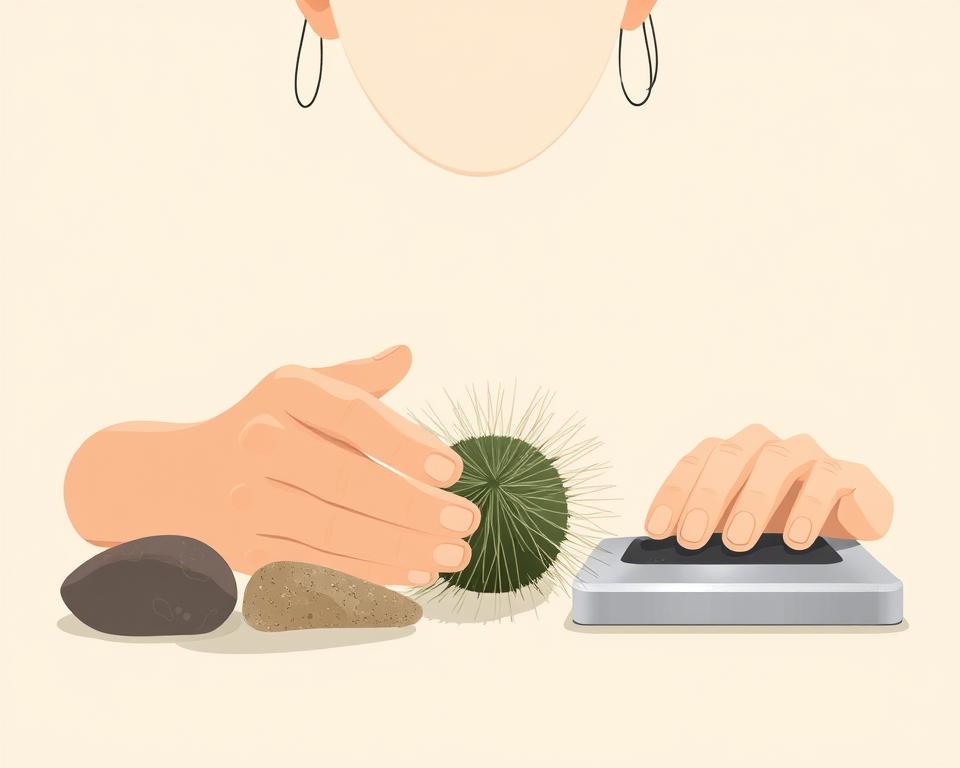
Physical Reset Buttons: Body-Based Approaches
Our bodies have natural ways to reset. When we feel overwhelmed, these methods can calm us down. They help reduce anxiety.
Quick Movement Interventions
A simple move can reset us. Here are two good techniques:
- The 30-Second Stress Shake-Off: Shake your body hard for 30 seconds to shake off tension.
- Pressure Points for Instant Calm: Press gently on certain spots, like between your eyebrows or at the base of your neck.
Temperature and Tactile Techniques
Our bodies like different temperatures and touches. Try these two:
- Cold Water Immersion for Nervous System Regulation: Putting your hands or feet in cold water is refreshing. It helps calm your nervous system.
- Weighted Objects and Deep Pressure Relief: Weighted blankets or objects can be calming. They give deep pressure that feels good.
Using these physical reset buttons can help us manage stress. Try different methods to see what works for you.
Mental Reset Strategies Without Meditation
Grounding techniques are great for calming your mind without meditation. They help when your brain feels too busy. They help you feel less anxious and more in control.
Cognitive Grounding Exercises
Cognitive exercises can distract you from racing thoughts. They calm your nervous system. Here are two good ones:
- The Alphabet Game: Try saying the alphabet backwards. Or find things around you that start with each letter.
- Math Problems as Distraction Techniques: Doing simple math in your head can take your mind off stress.
For example, when I’m feeling stressed, I count backwards from 100 by sevens. It’s a simple task that helps me focus and forget my worries.
Verbal and Visual Anchors
Verbal and visual anchors are like quick fixes for your mind. They include:
- Mantras That Actually Work: Saying a simple, positive phrase like “I am calm and in control” can calm you down.
- Visual Focal Points for Quick Centering: Looking at a specific object, like a candle flame, can help you focus.
Talking about your problems with someone you trust and doing calming activities also help. They work well with these mental reset strategies.
| Technique | Description | Benefit |
|---|---|---|
| The Alphabet Game | Recite alphabet backwards or identify objects starting with each letter | Distracts from racing thoughts |
| Math Problems | Solve simple math problems mentally | Shifts focus from stressful thoughts |
| Mantras | Repeat positive phrases | Calms the mind |
| Visual Focal Points | Focus on a specific object | Centers thoughts |
Conclusion: Creating Your Personal Chill-Out Protocol
Exploring different grounding techniques shows us that finding what works for you is important. Try the 5-4-3-2-1 method, physical reset buttons, and mental reset strategies. This way, you can make a chill-out plan just for you.
Grounding techniques help you stay in the moment without needing to meditate. They let you focus and feel calm. Adding these to your day can help you deal with too much stimulation.
Keep trying new things to make your chill-out plan better. The main goal is to find what calms you the most. This way, you’ll be ready to face life’s ups and downs with a clear mind.
Leave a Reply