When a person exercises, they can experience a boost to their health and confidence. However, they may also subject their bodies to harsh workouts that strain their joints or undermine consistency. Fortunately, low-impact exercise offers a practical path by reducing pounding while still providing them with a challenge.
These methods can help movement feel sustainable rather than punishing for adults juggling work and family responsibilities. Read on to learn about several helpful low-impact exercises that can keep you fit.
Walking
Walking remains one of the most accessible ways to stay active because it requires little equipment, fits nearly any neighborhood, and allows people to adjust pace with their current ability. A brisk walk can raise the heart rate and strengthen the legs while leaving the knees and hips with less strain than running does.
Walking is especially useful for people returning after inactivity or rebuilding their confidence after a long break from exercise. People can add variety by choosing hills or parks, then using longer routes and timed laps to make time for health amid daily obligations. It also helps exercise feel connected to real life instead of another chore on an already crowded calendar.
Swimming
Another helpful low-impact exercise that can keep you fit is swimming. When you take a swim, you get a full-body workout because water supports body weight while creating resistance against every stroke and kick during a session. This environment helps people build endurance and shoulder strength without the repeated impact that pavement or jump training can create.
This makes pool time useful for people of all ages, especially when the summer heat or winter ice makes outdoor exercise harder to maintain. Someone recovering from soreness or dealing with joint discomfort can use laps or gentle water jogging to train, maintain their confidence, and continue improving while giving irritated areas a calmer setting for movement and conditioning. Swimming also prevents exercise from feeling intimidating or tied to athletic identity.
Cycling
If you enjoy riding a bike, then cycling may be the low-impact activity that you are looking for. This approach allows you to strengthen your legs and improve your cardiovascular fitness. It also helps you to control intensity through terrain and resistance. Outdoor cycling offers fresh air and changing scenery, while stationary bikes provide busy people with a reliable option during bad weather or the winter months when outdoor routes feel inconvenient.
Riders can begin with relaxed sessions, then gradually add longer routes and higher resistance as their stamina improves. This approach allows you to support your progress without demanding hard landings or sudden direction changes that may aggravate joints during repeated weekly workouts.
Yoga
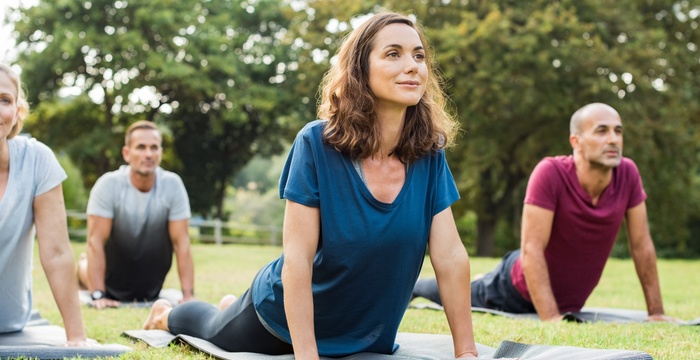
Those looking for an exercise that doesn’t require loud classes or intense competition should try yoga. This mind-body practice combines poses, breathing, and controlled movement. It can range from slow stretching sessions to more strength-focused routines.
For example, slow flows and chair yoga help the body move through controlled ranges while building awareness of posture and breathing patterns that affect comfort throughout the day, especially for people who spend long hours at computers or behind the wheel. In addition, it can help them reduce stress and reconnect with their bodies after long periods of sitting or commuting.
Pilates
Another low-impact method that involves movement is Pilates, which targets the core, hips, back, and stabilizing muscles. Mat classes, reformer sessions, and short home routines can improve your balance and muscular endurance while placing limited stress on your knees, ankles, and wrists.
Pilates also supports other activities because a stronger core helps people move through daily tasks with greater confidence. This can be especially helpful when their posture has been affected by sedentary habits or long commutes. It can also improve body awareness for anyone rebuilding strength after time away.
Simulator Use
Using a simulator can provide low-impact exercise by allowing people to practice athletic movements without long walks over uneven terrain or repeated strain from outdoor conditions. Many simulators encourage balance and coordination while providing users with an indoor environment that feels more comfortable and easier to maintain year-round, especially when weather or limited time make outdoor activity harder to schedule.
Some may look at simulators and think that professional athletes do not use them in their training. But that assumption would be incorrect. For example, pro hockey player Adam Fox uses one to enhance his golf skills. This technology can provide you with low-impact conditioning and measurable feedback to help you identify which aspect of your technique to improve.
Rowing
If you’re interested in a low-impact workout that provides you with a way to build cardiovascular endurance and muscular strength at the same time, you should consider rowing. This offers a powerful low-impact workout because the seat glides while the legs, back, and arms work together in sequence.
Rowing machines are especially useful for people who want efficient sessions without jumping or hard landings that may bother ankles or knees. Beginners should focus on controlled pacing and moderate resistance, so the movement feels smooth and each stroke develops rhythm rather than strain during workouts.
Tai Chi
Tai chi offers another low-impact option because it combines slow movement and controlled breathing in a format that places limited stress on joints and muscles. The practice uses flowing motions and measured transitions to improve balance and concentration, helping participants stay active without relying on high speed or heavy resistance during workouts.
Many people enjoy tai chi because they can perform it in parks or community centers. These locations give adults a calm setting for movement that supports flexibility and relaxation while still encouraging regular physical activity throughout the week.
Resistance Band Training
One last low-impact exercise to try is resistance band training, which helps people build strength without heavy weights or large machines. Bands challenge muscles with tension during presses and rows, giving users options to train at home or while traveling for work without rearranging rooms or relying on a crowded fitness center.
Because bands come in different resistance levels, people can progress gradually and protect joints from excessive load while keeping workouts approachable for busy days and small rooms. These bands also allow them to avoid the cost of an expensive gym membership.
After learning about various types of low-impact exercises, you can use them to help you maintain your health as you move through various seasons of life. When people choose activities they can repeat with confidence, fitness becomes less about extremes and more about building a durable routine that supports your health and energy.
Leave a Reply